This content is not yet available in English. You are viewing the original text.
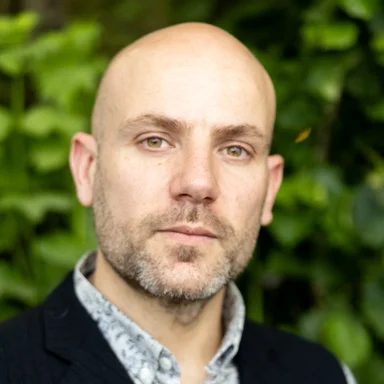
Giorgio Volpi
scientific technician Department of Chemistry University of Turin
Giorgio Volpi (Cuneo 1983) è laureato in Chimica presso l’Università degli Studi di Torino e ha conseguito il dottorato in Scienze Chimiche nel 2010. Attualmente ricopre il ruolo di Tecnico Scientifico presso il Dipartimento di Chimica dell’Università di Torino, è Docente a Contratto e svolge ricerche nell’ambito della luminescenza e dei complessi organo-metallici. Parallelamente all’attività lavorativa ha continuato gli studi laureandosi nel 2023 in Scienze Naturali. Ha svolto numerosi seminari e docenze presso la Scuola Holden, è autore per riviste come Sotto il Vulcano, Il Tascabile e numerose riviste specialistiche internazionali. Nel 2024 ha pubblicato per Aboca il saggio divulgativo “La natura lo fa meglio (e prima)” in cui si riporta un serrato confronto tra la tecnologia umana e le sorprendenti abilità della natura descritta come un inesauribile serbatoio di brevetti, materiali, soluzioni e idee per un futuro sostenibile ed ecocompatibile.
Past talks
Sun. 27 September
at 10:00 - 11:15
10:00 - 11:15
Sunday 27 September
Urban Center
Corso Camillo Benso Conte di Cavour, 2/2, 34132, Trieste, TS
Corso Camillo Benso Conte di Cavour, 2/2, 34132, Trieste, TS
TRIESTE
Are we really the most intelligent, creative and technologically advanced species on the planet? In this illuminating and provocative book, Giorgio Volpi takes us on a journey that dismantles our anthropocentric view of the world and shows that art, science and technology are by no means the preserve of human beings. The red-capped manakin, a small tropical bird, is famous for a display in which it performs a flawless Michael Jackson moonwalk. Cicadas of the genus Magicicada are among the finest timekeepers in nature: their extraordinarily long life cycles are perfectly synchronised, spent almost entirely underground before the insects emerge together only every 13 or 17 years. Stick insects are consummate actors: their bodies mimic dry twigs to fool predators and, when the wind catches them, they begin to sway just like the foliage of a plant. All of which is an invitation to an act of radical humility, and to the recognition that we are simply “an animal among other animals”. We are not the masters of the world but part of the great chorus of living things, in the colossal orchestra that is nature. Discovering nature today means understanding what it truly means to be human, and laying the foundations for a new society living in symbiosis with its environment: only then can we build a genuinely sustainable future.
Location: Urban Center - Corso Camillo Benso Conte di Cavour, 2/2, 34132, Trieste
speakers