This content is not yet available in English. You are viewing the original text.
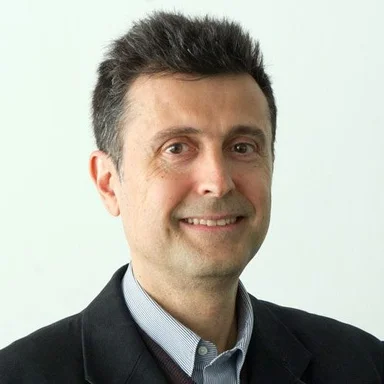
Gabriele Beccaria
science journalist, editor-in-chief of Tuttoscienze La Stampa
Gabriele Beccaria è giornalista scientifico, responsabile dell’inserto TuttoScienze de La Stampa e caporedattore dell’Hub Salute del Gruppo Gedi. Ha studiato giornalismo alla Boston University e frequentato il Leadership Seminar alla Georgetown University di Washington DC. Si occupa con passione di scienza, medicina e ricerca, raccontando scoperte e protagonisti del mondo scientifico. È autore del saggio Come potrebbe essere il domani, scritto insieme a Massimo Inguscio. Con il suo lavoro contribuisce a rendere accessibili al grande pubblico i temi più complessi della scienza e dell’innovazione.
Past talks
Sat. 26 September
at 15:30 - 16:15
15:30 - 16:15
Saturday 26 September
Teatro Miela
Piazza Luigi Amedeo Duca degli Abruzzi, 3, 34132, Trieste, TS
Piazza Luigi Amedeo Duca degli Abruzzi, 3, 34132, Trieste, TS
TRIESTE
Women’s contribution to the birth and development of medicine has been immense – and it has been a collective undertaking. Can the female perspective in the making of modern medicine be reconstructed? Does it make sense to speak of a “feminine” way of doing science? Doctors in practice long before they were recognised as such, women built a body of knowledge that grew in the space they had always occupied: on the margins of the history written by men, and rooted in the tasks that kept them busy, from preparing food and handling plants to childbirth, the care of the sick and the management of life’s final stages. Over the centuries women made discoveries and built knowledge that became the backbone of our medicine. They were natural scientists, biologists, chemists, pharmacologists and gynaecologists. Daniela Minerva, however, does not turn them into icons. Recovering the female perspective in the history of medicine calls for no myths, because this was a collective enterprise, a “plural feminine” that quietly gave shape to modernity. She follows the thread that links herb gatherers and ladies of poison, alchemist-pharmacologists and modern scientists: a body of knowledge running across the centuries, from pre-Hippocratic magic to the high technology of contemporary healthcare. Written with a journalist’s unsparing pen and a close eye on the historical sources, the book traces the stages of a long journey that reaches to the present day: a cultural tradition that places women at the centre of the making of medical knowledge.
Incontro con l’autrice finalista
Location: Teatro Miela - Piazza Luigi Amedeo Duca degli Abruzzi, 3, 34132, Trieste
speakers
Fri. 25 September
at 20:30 - 22:30
20:30 - 22:30
Friday 25 September
Teatro Verdi
Piazza Giuseppe Verdi, 1, 34121, Trieste, TS
Piazza Giuseppe Verdi, 1, 34121, Trieste, TS
TRIESTE
Self-consciousness is a strange thing to have. We are the only animals that make experience the object of habitual attention: participant observers of our own being. Lambros Malafouris (University of Oxford) looks for the origins of that oddity outside the skull. The self is not something we have, it is something we do: an act of self-bounding performed where brain, body and material culture meet. He calls it STRANGE, Situated TRANsactional GEnesis. We are situated in the environments we find and make, we become what we are through our relations with things, and a self is never finished. Knapping a stone, the maker meets the author of his own gestures. A shell bead shows the body as it appears in someone else's field of view. What are algorithms making of us now?
STRANGE PEOPLE. HOW THINGS MAKE US WHO WE ARE
Keynote lecture by
LE DISAVVENTURE DELLA VERITÀ
Intervento di
Location: Teatro Verdi - Piazza Giuseppe Verdi, 1, 34121, Trieste
speakers